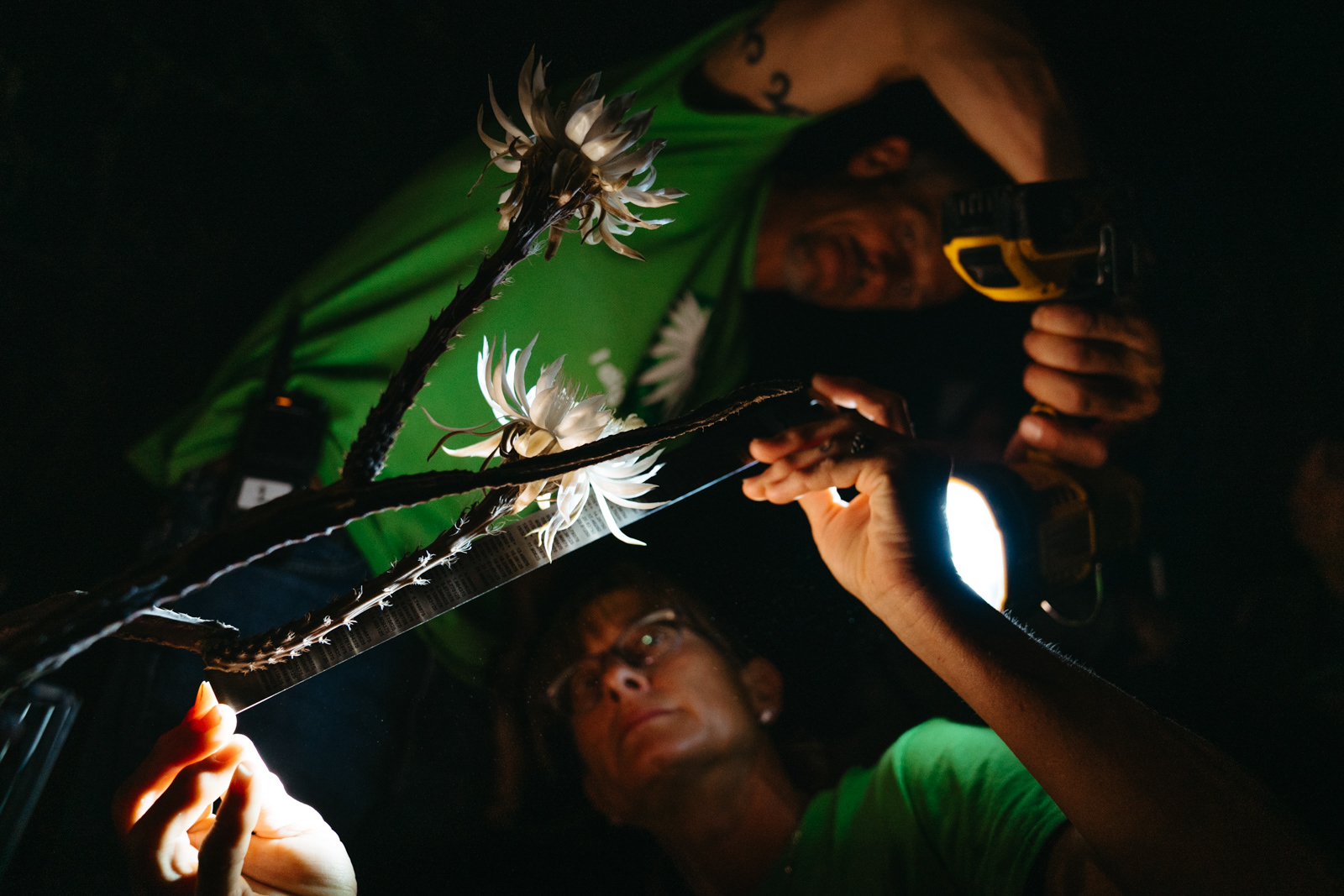
Shauna Smith measures the bloom of Peniocereus greggii, Queen of the Night, at Tohono Chul Gardens / Adrian O'Farrill
Queen of the Night blooms: The single night life of a desert flower
By: Adrian O'Farrill
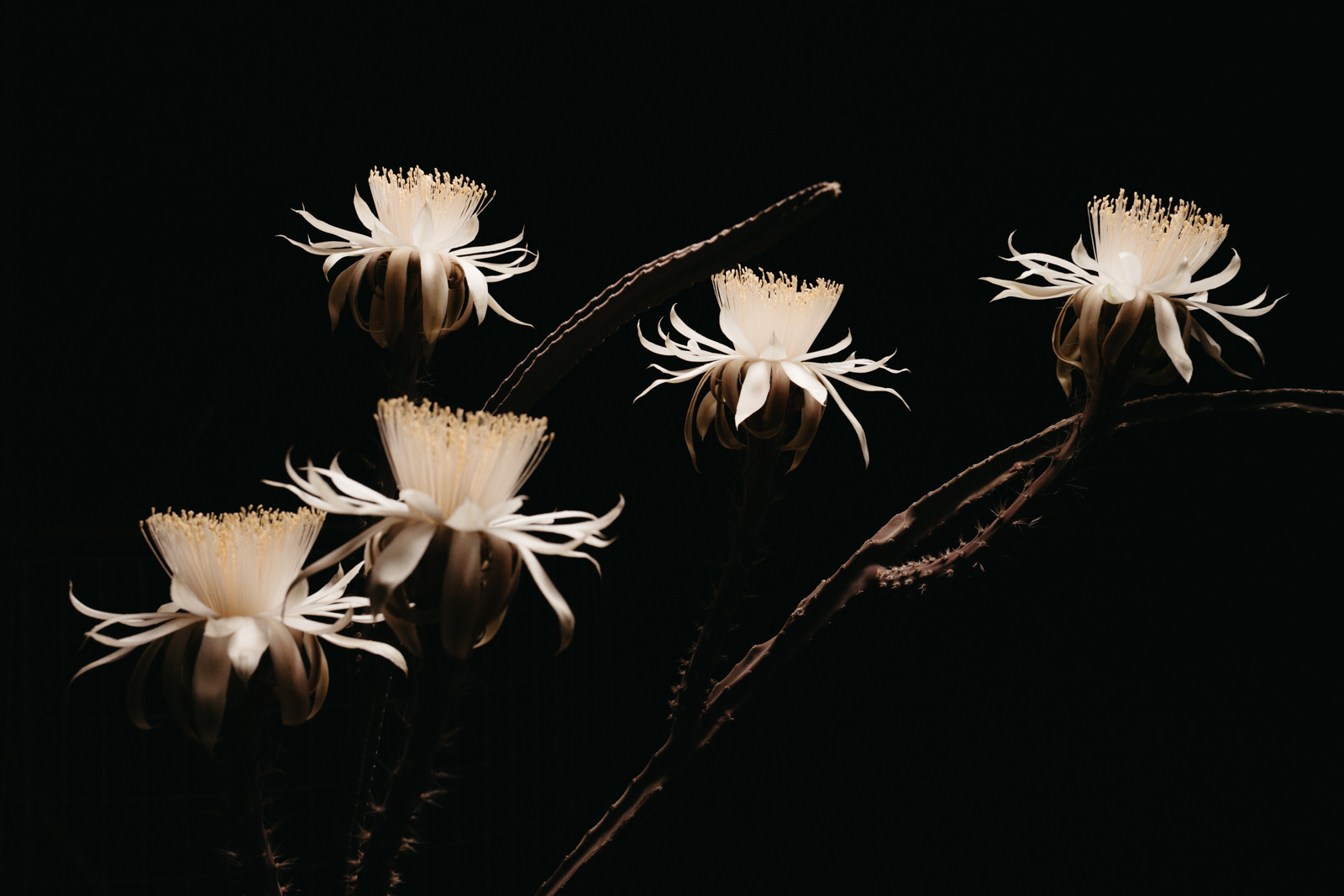
The cacti Peniocereus greggii, also known as the Queen of the Night, unfurled its petals Monday night for its annual bloom. The one-night spectacle drew crowds of admirers to Tohono Chul Gardens to get a glimpse of the night-blooming cereus before it faded with the dawn, not to return for another year.
The blooming cactus is native to the Sonoran and Chihuahuan deserts. Rather than flower multiple times a year, which other plants do to increase chances of pollination, this species prefers to do it all in one big synchronous bang.
“The flowers open synchronously, meaning that not only most of the plants here, but most of the plants in the whole Tucson basin bloom in the same one or two-night period,” said Jack Dash, gardens and facilities manager at Tohono Chul.
His day starts at the crack of dawn, measuring the bud’s width to accurately predict when they will bloom. Unlike the flower which goes to work one night a year, the crew at Tohono Chul works around the calendar to ensure the plants are cared for. Shauna Smith, a gardener and arborist at Tohono Chul, said she starts watering the cacti once a week in April.
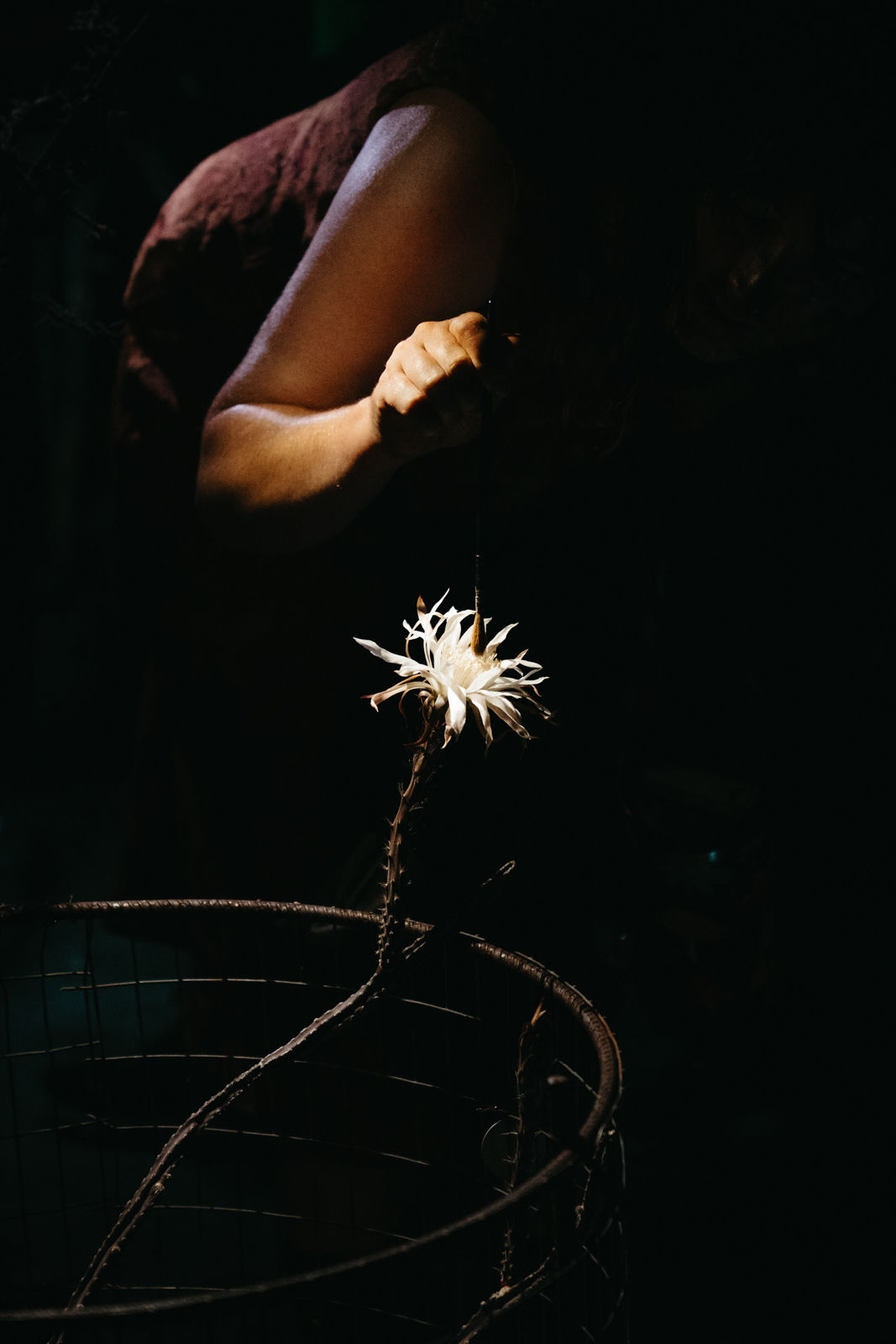
A woman dusts the pollen off the bloom for manual pollination / Adrian O'Farrill
“If it's a dry winter like it was, they need a little watering, so about once a month during the winter is what we're shooting for,” said Smith. She also gives the plants a little cactus juice as fertilizer and tends to the mulch. But her big role comes the night of the bloom, aided by a large flashlight as she meanders through the crowds of observers in the dark. Smith and her crew measure the flowers and collect data which the gardeners hope will answer the question that eludes them.
What causes a bloom?
Since the date is variable, with a window between late May and early August, gardeners look for every clue that might indicate bud growth. Even with data dating back to 1992, there’s still no conclusive answer as to what exactly triggers the flowers to open on any given night. Dash and the team continue to chart the yearly event in hopes of finding a pattern. But this season, they have a hunch as to what caused the early bloom.
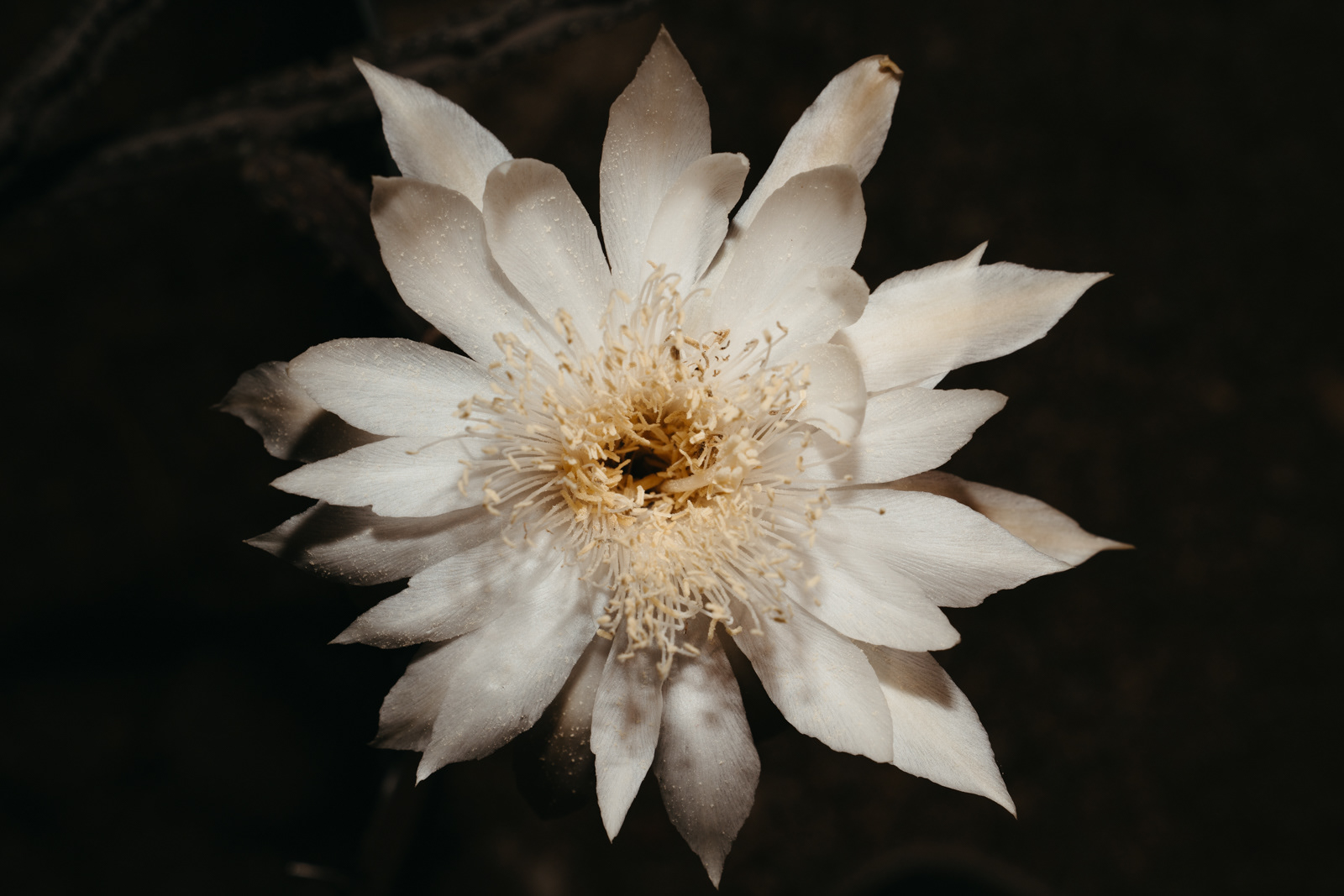
Bloom of Peniocereus greggii, Queen of the Night / Adrian O'Farrill
“We had that rain last Sunday, and we really quickly watched some of these flower buds go from 30 or 40 millimeters to 150 or 200 millimeters. So they very rapidly responded to that rainfall,” said Dash.
That early summer rain might have just punched the ticket for the queen's arrival. And as the sun set while the flowers rose, they did what they were meant to do — wait.
The patient flowers sit still in the night, hoping that their only pollinator, the hawk moth, will fly by, meticulously reach into the long floral tube, and drink from multiple flowers to allow for cross-pollination. The more plants that bloom all at once, the higher the chance that the subtle melon aroma will permeate the desert air and attract a moth.
For plants like Peniocereus greggii which are not as common and abundant, Dash believes the one-night bloom is a reliable strategy. But the synchronous bloom is a double-edged sword.
“With synchronous blooming, there's a lot that could happen. If we got a surprise monsoon storm that damaged the buds or damaged the flowers, that could mean no fruit set that year for any of the plants,” said Dash.
It’s a genetic gamble that has worked throughout its evolutionary history. Although, for Dash, his main concern is not a monsoon ruining the buds, but accidental habitat destruction as a result of urban development.
“When developers or road builders are moving into an area, they'll often survey plants like saguaros, but because Peniocereus greggii is so hard to find, that even if you do have an environmental survey team out there, they could totally just miss these plants,” said Dash.
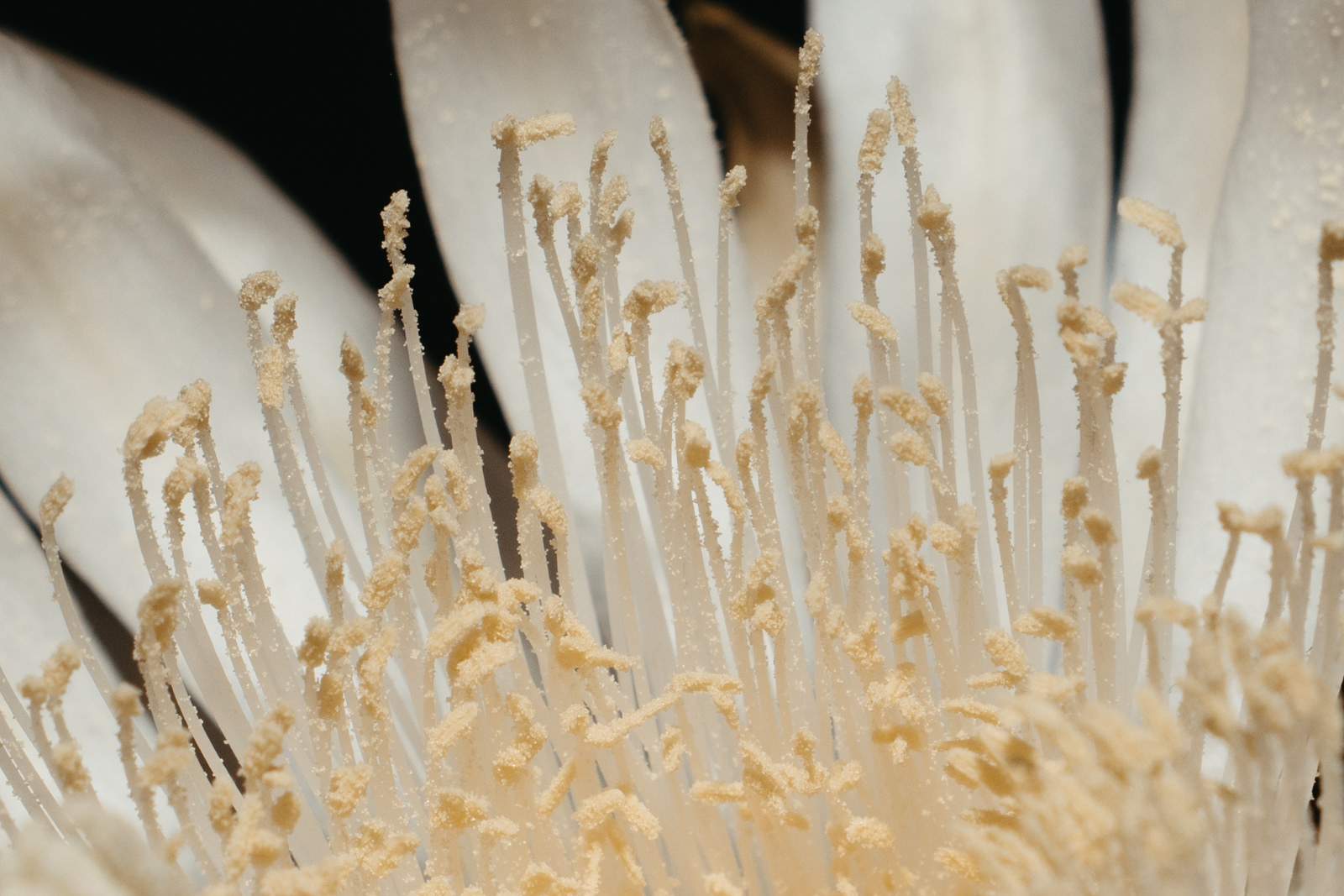
Close up of the bloom / Adrian O'Farrill
Drought conditions over recent years, which saw one of Arizona’s hottest and driest on record, could also be playing a role in the development of the blooms and the rest of the plants at the garden which Dash said, are seeing a decline in the plants that are not being watered by the team.
And while the flowers appear on the same night, not all the plants bloom. Out of the 128 Peniocereus greggii plants at Tohono Chul, only 6 gave blooms last night.
“Tomorrow, we'll probably have more buds, but we haven't seen a lot of growth,” said Juliana Ahumada, living collections coordinator at Tohono Chul. “As far as it goes for budding, it's just what happens during these intense droughts.”
But team members will continue to water the cereus plants throughout the year as needed depending on rain conditions. And as morning light waves goodbye to the queen, Dash said he’ll be there at the break of dawn, measuring the buds along with the rest of the team, waiting for next year's summer bloom.