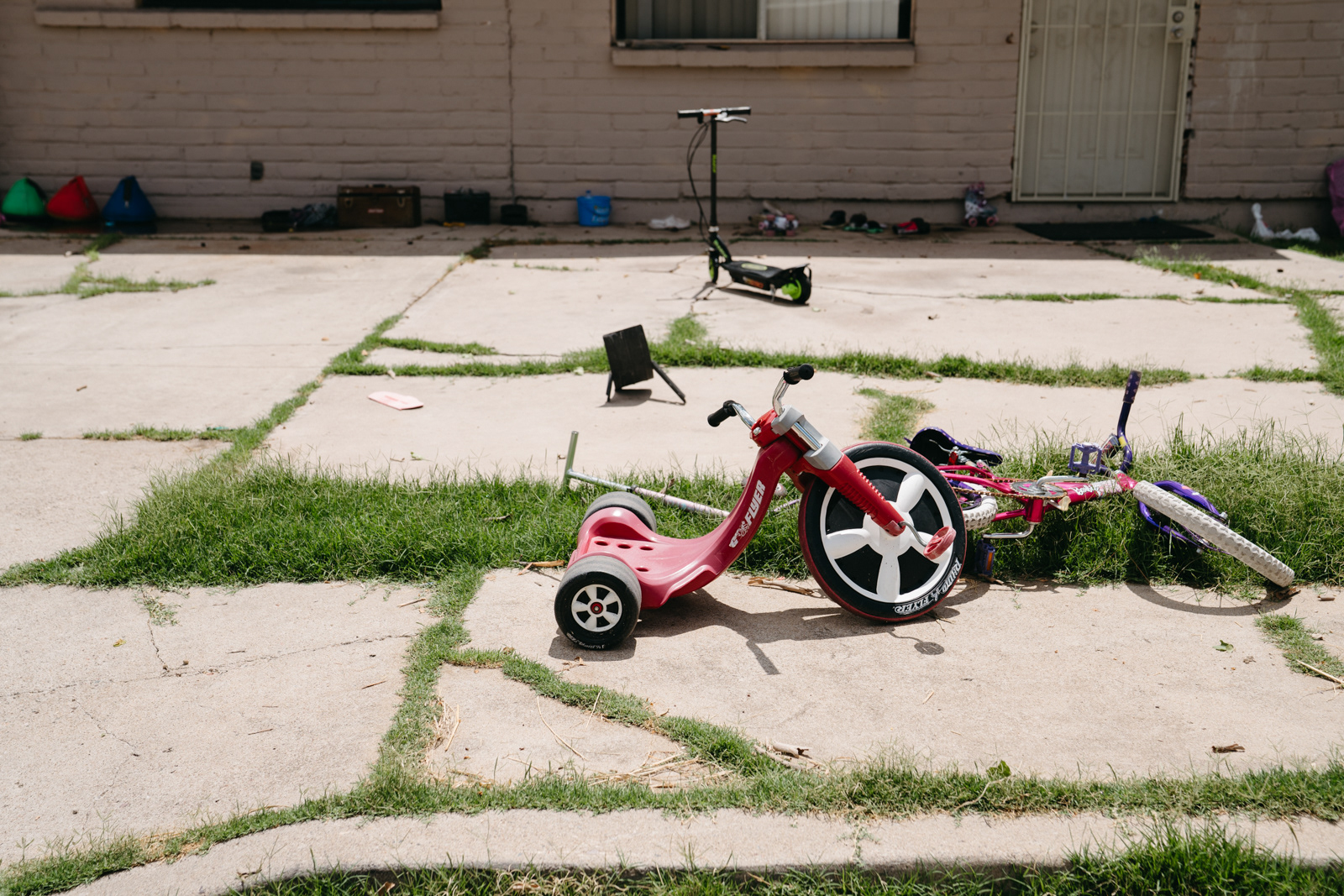
Kids toys scattered in front of a house in Chula Vista / Adrian O'Farrill
How an embezzlement scheme fumbled $50 million meant for Southern Ariz colonias
'Part of the problem of border poverty': Millions in federal funding lost, and a $500k grant that would address Arizona's poorest communities in limbo in Santa Cruz County
By: Adrian O'Farrill
A $500,000 grant to study colonias along the I-19 corridor from Tucson to Nogales is set to expire at the end of the calendar year. Due to a fallout from the Santa Cruz County treasurer being charged with embezzlement, a much larger grant for distressed border communities was lost.
That would likely have brought $52 million to Southern Arizona's poorest unorganized neighborhoods.
When Angela Donelson walked away from her role as consultant to Santa Cruz County last year, she was unsure if she would ever hear what happened to the $500,000 grant her firm was to manage on behalf of the county.
The strategy development grant would have addressed long-standing employment and social infrastructure concerns in colonias along the I-19 corridor from Tucson to Nogales. Now, the funds are paused in Santa Cruz County and are set to expire at the end of the calendar year.
“I'm frustrated, I care about this, I wrote two books about this, I worked in the field on these things, and I would love to see our governments and our communities be able to move forward on this stuff,” said Donelson.
For decades, Donelson worked in regional planning and community development, focusing on colonias throughout Southern Arizona. Her firm, Donelson Consulting LLC, led the coalition along with her main client, Santa Cruz County. The county was awarded the first phase grant of $500,000, but when former Santa Cruz County Treasurer Elizabeth Gutfahr was caught embezzling more than $38 million in public funds last year, the second phase of the grant fell through, and Donelson resigned.
The grants were part of a Biden-era program and stemmed from the former president's Investing in America agenda. Through two phases, the "Distressed Area Recompete Pilot Program" sought to answer issues in persistently distressed communities, of which Donelson was all too familiar, having earned her Ph.D. in regional development and writing a book on colonias.
“If you can't manage federal money, and if you can't help people use that money, then how are you ever going to prove yourself to be a trusted or capable steward?” asked Donelson. “That is part of the problem of border poverty.”
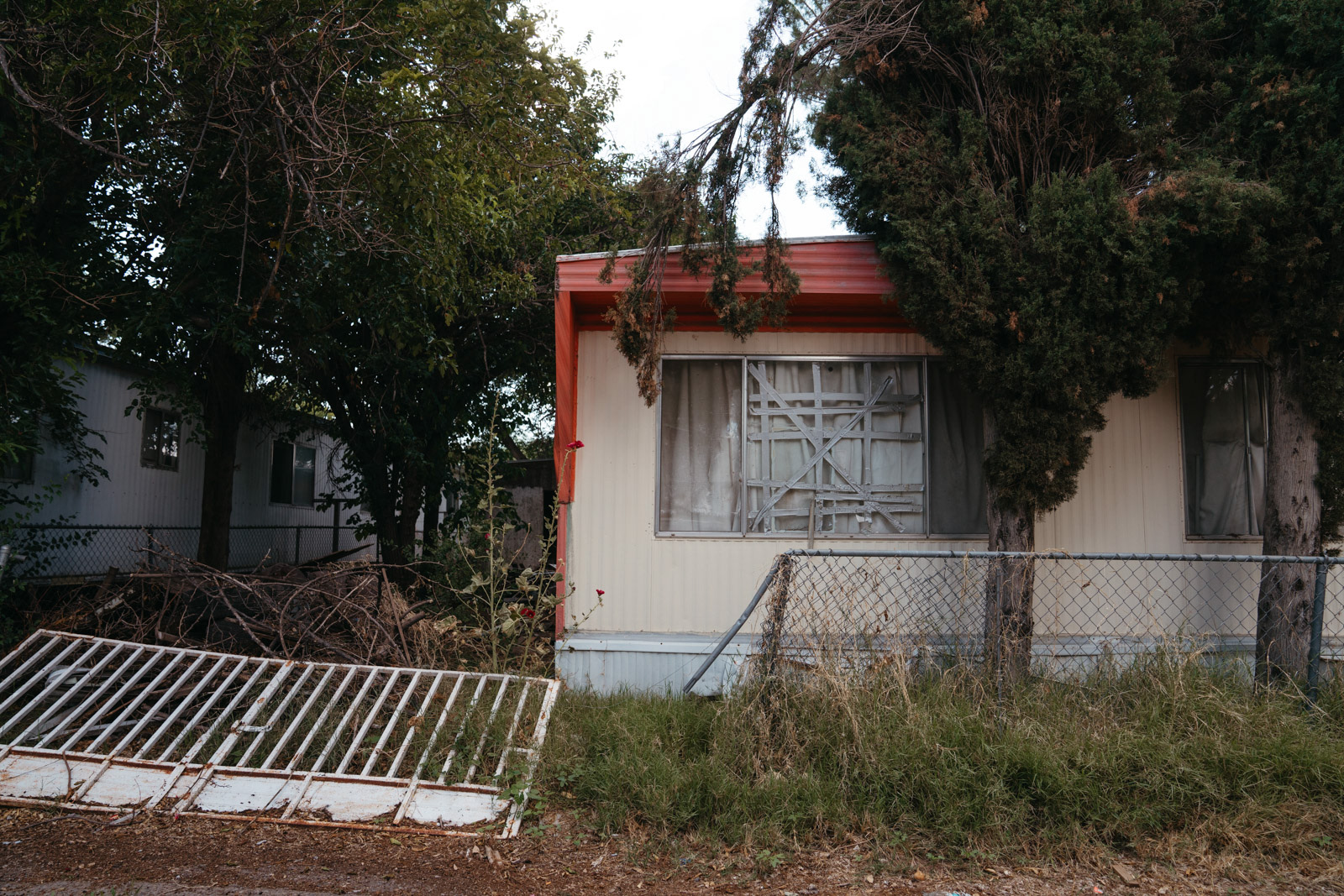
A home with a fallen over fence and broken windows in Pete Kitchen / Adrian O'Farrill
An initial grant was awarded for strategy research, while the second, a much larger $52 million grant, would have been awarded to implement the strategy. Donelson said it was the most competitive program the EDA had ever run.
So her team wrote the proposal, which sought to explore ways to bring job training and services for employment creation for the 16,439 unemployed prime-age individuals down the Santa Cruz River Corridor. Both the initial grant and the plan were approved at the end of 2023, paving the way for the study and the eventual application for the full $52 million. But the fiasco at the treasurer's office derailed the whole plan.
“We had 100 organizations involved. We did all that work in three and a half months, helped coach the groups on the process,” said Donelson. When the program was pulled, everyone was left disappointed with no indication as to where the awarded grant would go.
To have made the program a success, Donelson needed to contract the help of fiscal agents, organizations to come in and supervise over a hundred partners that submitted letters of commitment for phase 2. But that was around the time the news of the treasurer broke.
“Angie reached out to me and said this is a bigger problem than we thought. Perhaps this recompete might be a little cleaner if you were to step in as a fiscal agent,” said Michelle Phillips, executive director of the Greater Green Valley Community Foundation.
The idea was for Donelson to catch her up to speed on the project since so much was changing fast. The entire phase 2 plan faced time constraints, and Donelson said her plan was to vet contracts after the grant was awarded through a co-governance process led by community organizations.
“The county was the original fiscal agent, so they were more up to speed than we were,” said Phillips. “But because of the Gutfahr embezzlement, we decided to step in and be the fiscal agent.”
But the scandal proved to be detrimental to the plan, and federal officials lost trust in the county, which ranks among the poorest in the state. The half-million dollars are now sitting idle in Santa Cruz County, where Chris Young, deputy county manager, said they had been paused last fall and already pushed for extension before the funds are lost at the end of the year. While the Santa Cruz coalition did submit their application for the full grant last spring, they were not among those selected by federal officials.
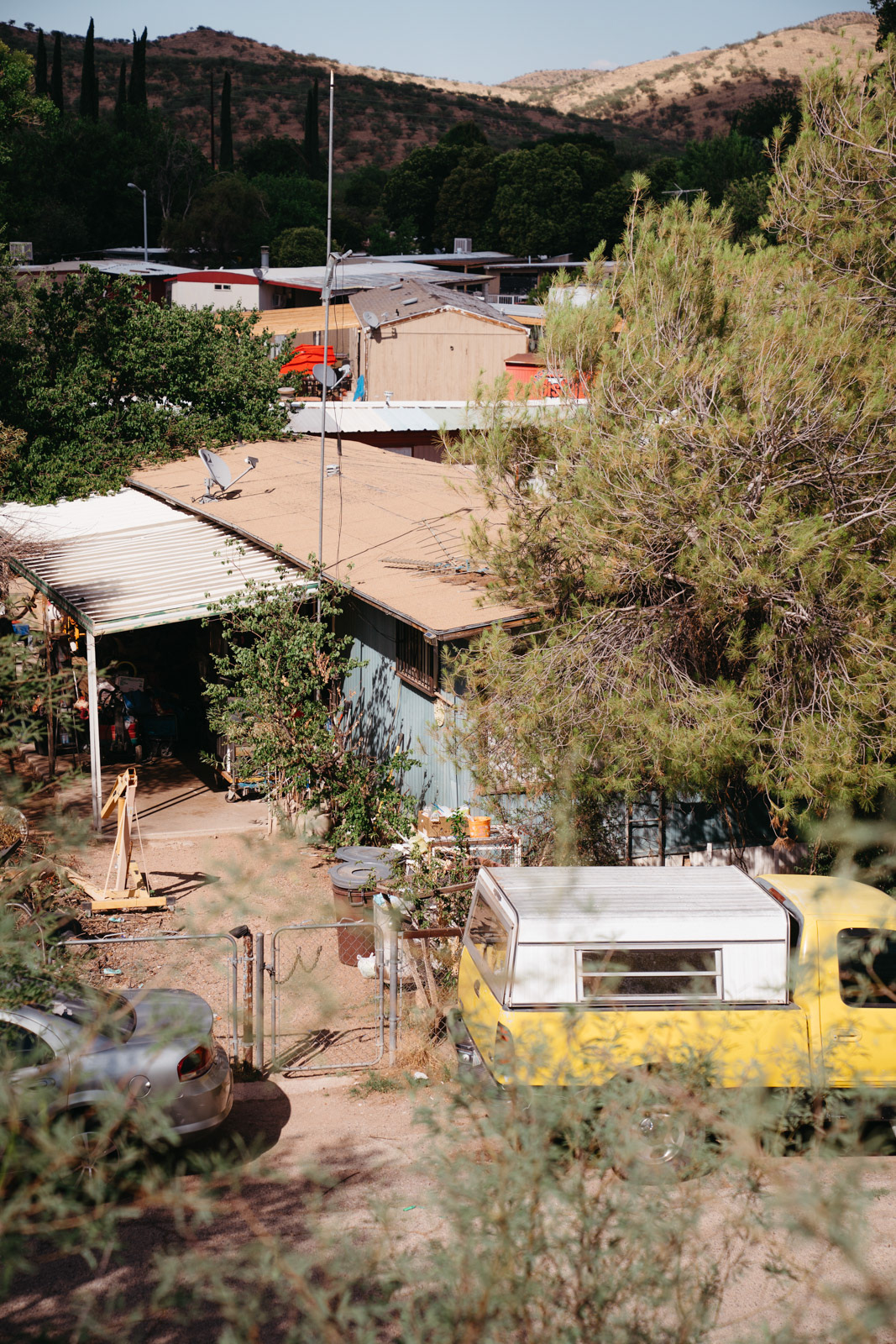
An overview of Chula Vista and Pete Kitchen from a nearby hill / Adrian O'Farrill
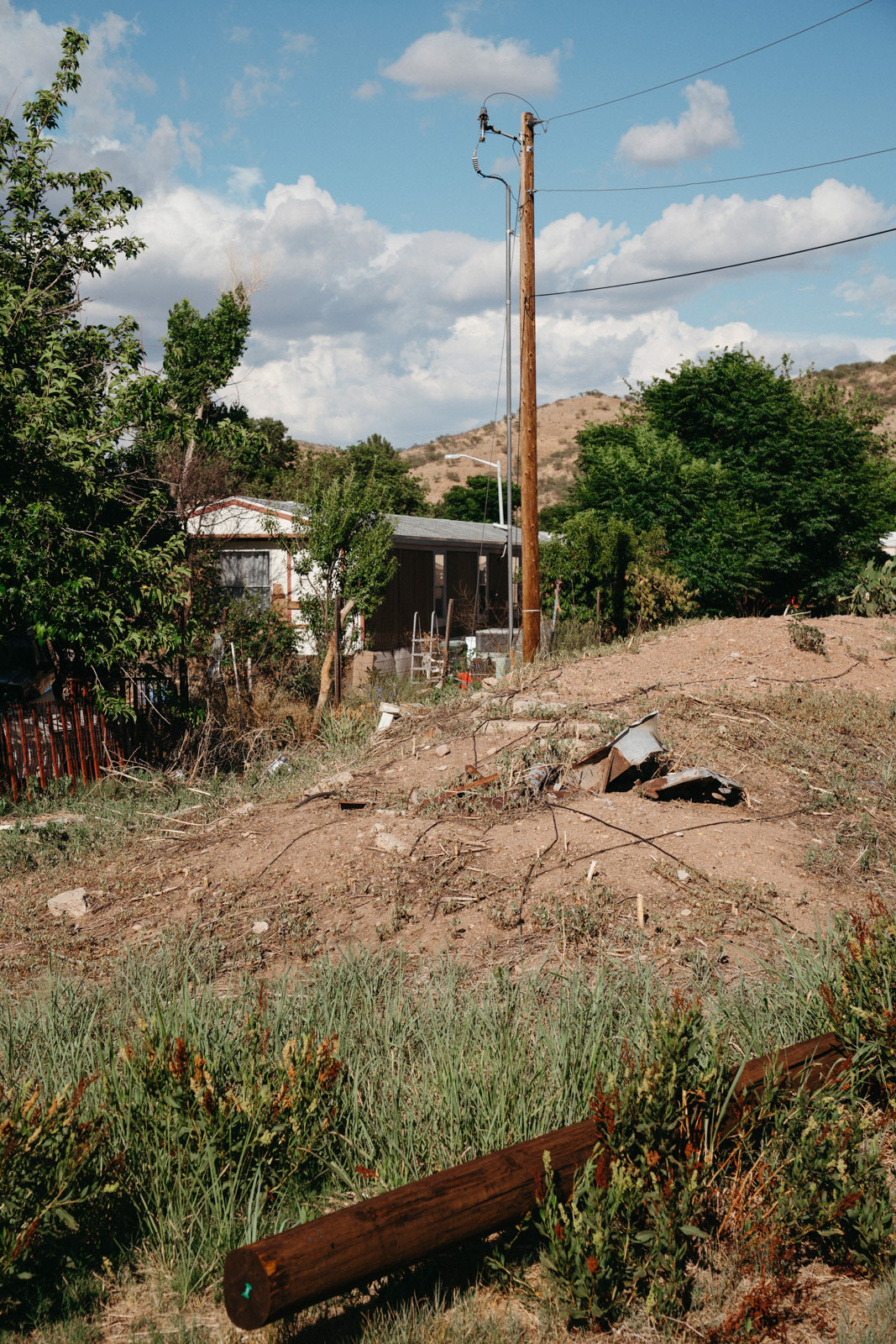
“They were going to do a community job seeker, assets-needs assessment, property inventory, what needs rehab, commercial opportunities, things like that,” said Young, albeit he was not familiar with what a colonia even meant.
Colonias roughly translates to “communities” in Spanish, although the translation is not direct. They started to spring up over a century ago near the border of Mexico and the southern U.S and are still primarily Hispanic in demographics. For example, Douglas began as a smelter location for the nearby copper mines of Bisbee, and flourished at the end of the 1800s. But as the town grew, so did the neighborhoods in the periphery without adequate infrastructure. That issue is due in part to so-called “wildcat” subdivisions.
The term refers to when residential parcels are split into smaller parcels to intentionally circumvent subdivision laws. In turn, that can result in neighborhood layouts that pose challenges for both residents and local governments.
Just south of Tucson in Summit, Christopher Galindo said that when his parents moved to their current home about 15 years ago, the seller promised that the roads would be paved. Over a decade later, the land that falls on Pima County has only fallen deeper into disrepair; a sign covered in bullet holes states, “not a county maintained road.”
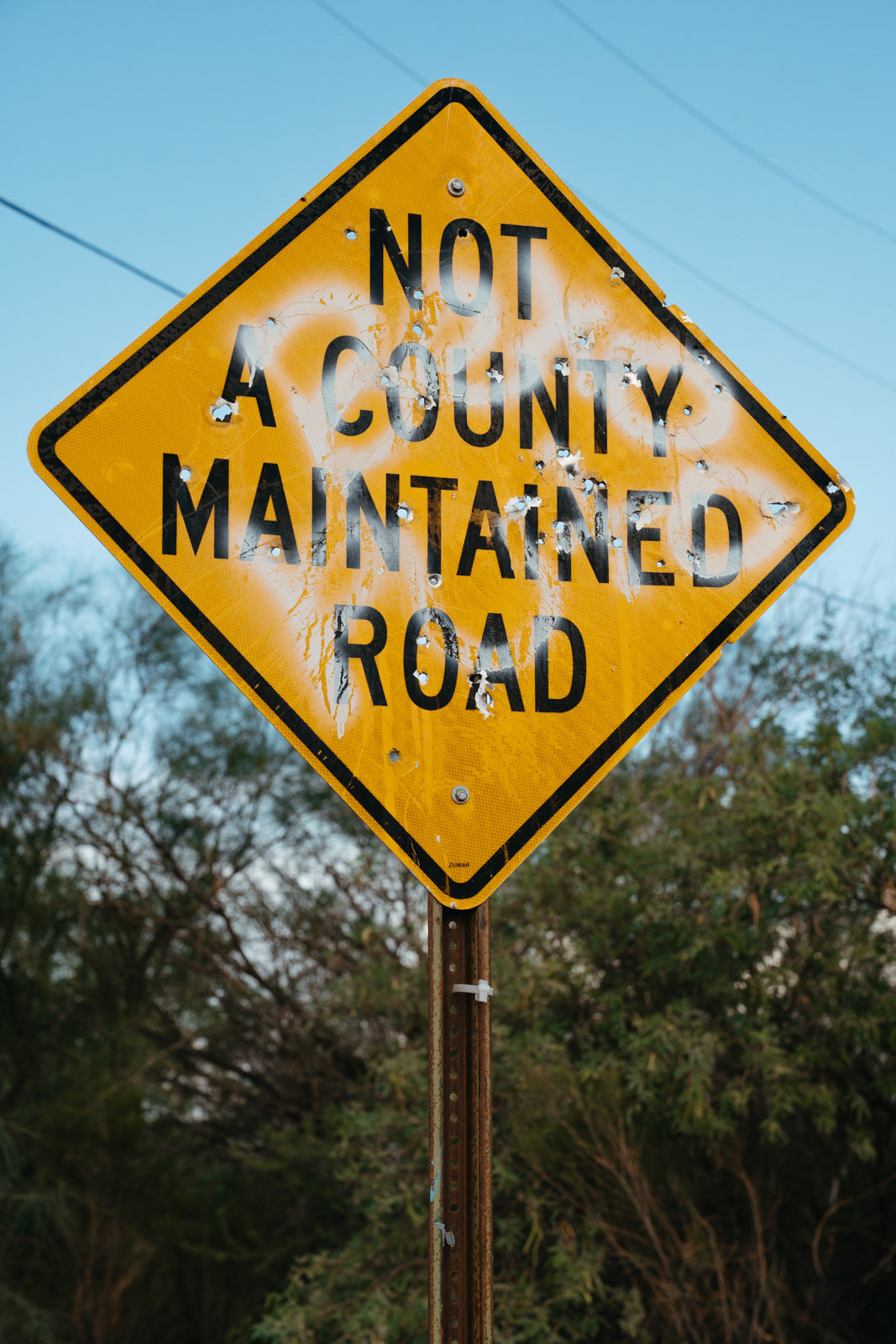
A street sign used for target practice and graffiti in Summit, just south of Tucson / Adrian O'Farrill
“In some places, out-of-state people created these; they bought cheap property back in the '50s and '60s,” said Donelson. “They improperly plotted parcels, or they're just tiny lots with narrow streets, and they were recorded that way when people bought the lot.”
Galindo said that every monsoon season, the rains carve the holes deeper. Towards the end of his street, there is one road that has become that's nearly impassable, continuously filling with trash that flows through the neighborhood after a heavy storm.
“Every monsoon season, we pay someone to come down and fix the roads a little bit. There's this guy who got like a dumpster truck, and he brought a whole bunch of dirt to fill in the holes a little bit,” said Galindo. As for trash, his house and a few other neighbors pitch in for a communal dumpster that a private company collects from. But those prices have also been rising throughout the years.
In places like Pete Kitchen and Chula Vista, a small colonia of over 250 homes north of Nogales, residents say they live a quiet life. Lorenia Bojorquez has been living in Chula Vista for over 50 years; she built the house she lives in and has seen the colonia grow from its inception.
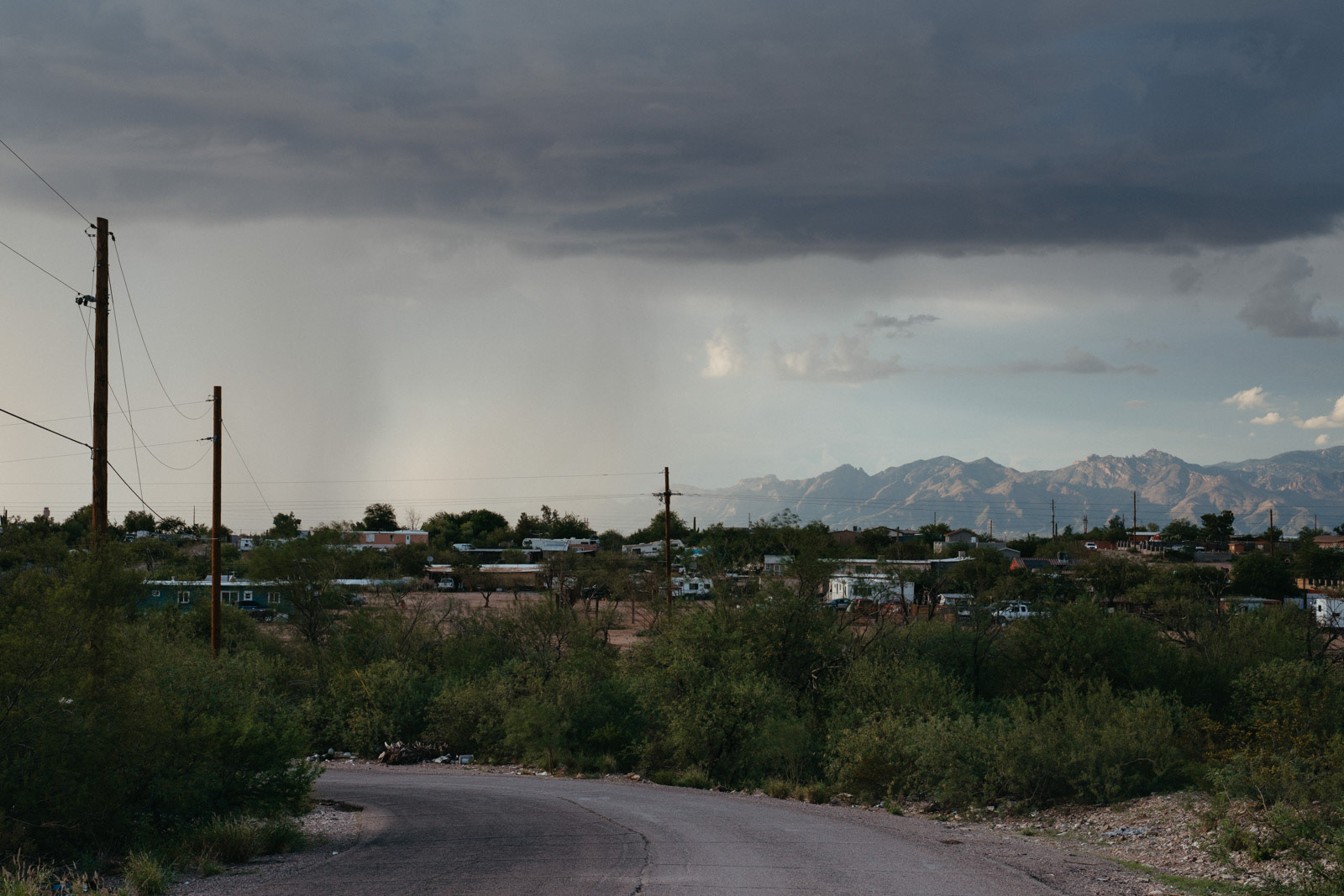
A storm rolls in over Tucson as seen from Summit / Adrian O'Farrill
The Tucson Sentinel interviewed multiple residents, and they all agreed that the neighborhood is “tranquilo” or peaceful. But they all acknowledged the floods that tore through the neighborhood back in the 1970s and 1990s. Bojorquez said that the water reached the windows, and another flood was still the main concern for most residents.
But that has not stopped people from building a rugged way of life along the dry Sonoran and Chihuahuan deserts from California to Texas. Neighborhoods need to be within 150 miles of the border to be considered colonias. Despite their lack of adequate water, electricity, and sewage, Donelson said home ownership rates are higher in colonias than they are in other parts of Pima County; that comes from the desire to own land. One of the main questions the program would have addressed was property ownership.
“We don't know anything about who owns property,” said Donelson. “What are the conditions? Are these out-of-state property owners? Do they create shell companies? "How many rental properties are there?”
But there is still hope that the idle funds can still be used. Donelson said the plan to go along with the grant was also approved and is attached to it. All that’s left is for someone to take the lead; Donelson said she was unsure if she would like to return to the role after her experience.
Heath Vescovi-Chiordi, director of Pima County's Economic Development Department, was involved in the original recompete plan. In an email response to the Sentinel, he said Pima County was actively pursuing a path to get the funds used, but they had not reached out to Santa Cruz County yet. Without communication between the two counties, the $500,000 would continue to remain frozen ahead of the expiration date only four months away.